
Introduction
Moving thousands of tons of aggregate, demolition debris, recycled concrete, soil, mulch, or scrap takes more than one good conveyor. It takes coordinated equipment for receiving, processing, conveying, separating, and stockpiling.
Operators know where it goes wrong: bottlenecks at the hopper, spillage at transfer points, abrasive wear, inconsistent flow, and unplanned downtime. Buying machines that don't match the application makes every one of those worse.
This guide defines bulk material handling, walks through the main equipment categories, lays out selection criteria, and explains DDK Services’ equipment support. DDK’s new-equipment sales and rentals are limited to EDGE Innovate equipment. Repair services and used machinery sales are not restricted to EDGE.
Key Takeaways
- Bulk material handling covers moving, processing, storing, and discharging loose material.
- Feeders, crushers, screeners, conveyors, and separators work best as one coordinated system.
- Material properties, throughput, site layout, and safety should drive selection.
- Buying, renting, or choosing pre-owned each fits different utilization and budget profiles.
Bulk Material Handling Equipment and Systems: Types and Uses
Bulk material handling is the controlled movement, processing, storage, and discharge of loose materials. ISC Manufacturing frames the field around dry materials stored in heaps, including sand, gravel, stone, and mixed wastes.
A single machine does one job. A system links machines so material moves through a workflow. Picture a load of demolition concrete: it arrives at a hopper, a feeder meters it into a crusher, a magnet pulls out rebar, a screener sizes it, and a stacker builds the pile.

Conveyors and transfer equipment
Belt conveyors move aggregate, crushed concrete, soil, and mulch continuously. Transfer conveyors link processing stages, while stacking and radial conveyors build stockpiles without a loader.
Selection factors:
- Distance and incline
- Material size and abrasiveness
- Mobility requirements
- Transfer-point design
- Enclosed or guarded components
Chute clearance depends on the largest lump size, and liners must resist abrasion while still letting material flow.
Feeders, hoppers, and chutes
Hoppers receive and buffer material. Feeders regulate what reaches crushers, screeners, or conveyors. For wet, sticky, clay-rich feed, wobbler feeders can recover soil from rock, concrete, or stumps.
Common flow problems include:
- Bridging or arching across the outlet
- Ratholing, where material stagnates around a narrow flow channel
- Surging and buildup
Jenike & Johanson notes that in mass flow, all material moves whenever any is withdrawn. Its guidance ties wall slope and smoothness to wall-friction testing, and outlet size to arching prevention.
Crushing, screening, shredding, and separation
Each machine has a distinct role:
- Crushers reduce oversized rock, concrete, asphalt, or demolition debris. Jaws handle hard primary feed; cones cover secondary duty; impactors suit recycling and cubical product.
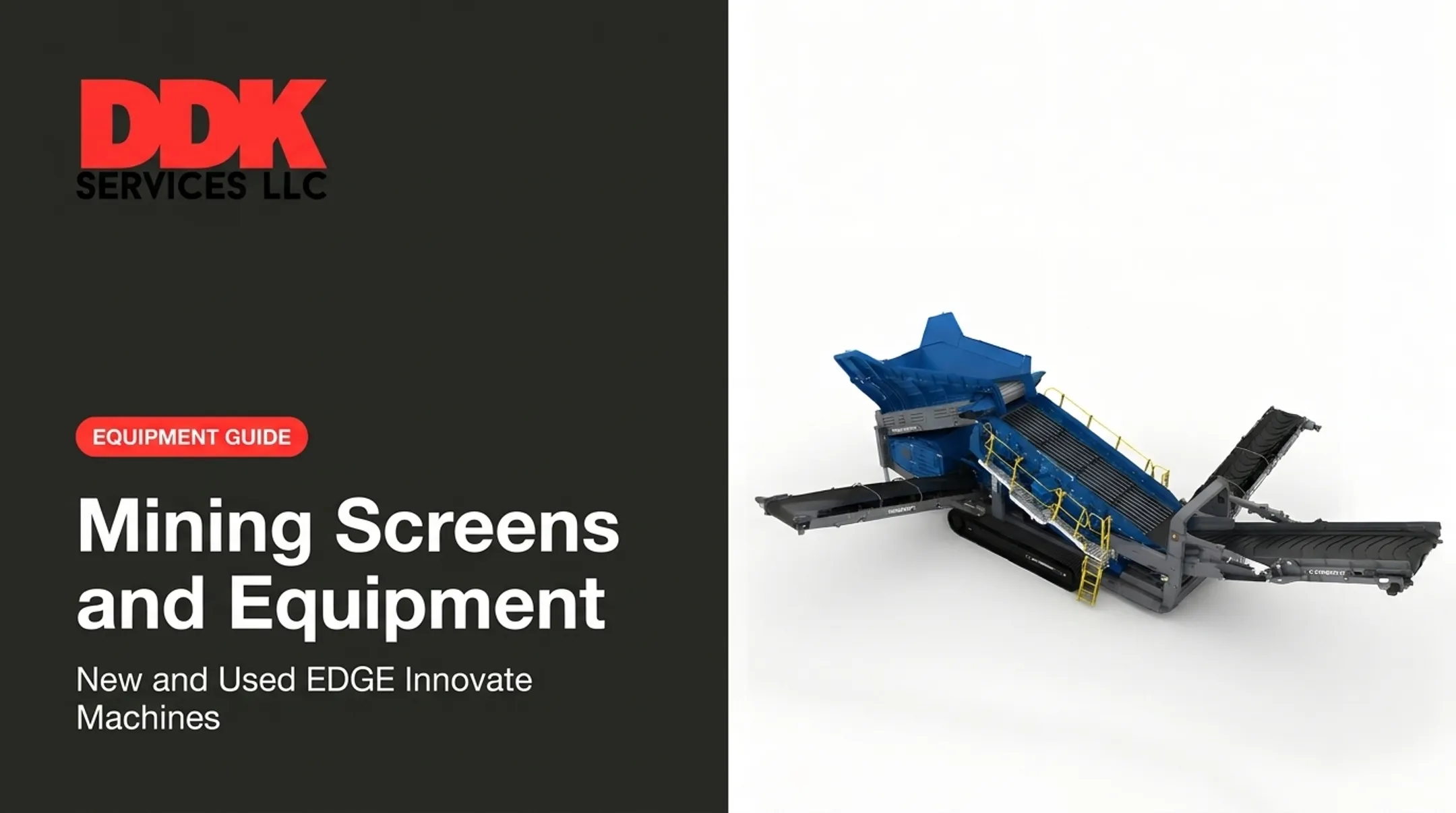
- Screeners separate by size. The EDGE TRT622 tracked trommel targets aggregate, topsoil, mulch, compost, and C&D.
- Shredders process wood, green waste, biomass, and C&D. The EDGE VS420 uses twin high-torque shafts.
- Separators remove unwanted material. Magnets pull ferrous metal, and the EDGE MC1400 combines air separation with magnetic recovery.
Quarry operators lean on crushing and screening. Concrete recyclers add magnets. Mulch and compost producers pair shredders with trommels. The right setup depends on the feedstock and the end product.
Stockpiling, reclaiming, and mobile equipment
Stackers and stockpile conveyors store material. Loaders or reclaim feeders return it to processing. Mobile crushing and screening plants move to where the material is.
Mobile makes sense for temporary projects, multiple sites, shifting stockpile locations, or jobs where cutting haul trips matters. At St. Louis Lambert International Airport, Midwest Crushing & Recycling crushed old-runway concrete onsite for the new runway, avoiding offsite hauling. A stationary plant still wins for long-term, high-volume, fixed-feed operations.
Common Challenges in Bulk Material Handling
Dust, spillage, and carryback
Loading zones, transfer points, crushers, screens, and conveyors all leak material and dust. EPA fugitive dust guidance covers crushing, conveying, loading, and storage, with controls such as transfer curtains, enclosure, belt wipers, suppression, and cleanup.
Silica is a related concern. OSHA's construction standard (1926.1153) sets a permissible exposure limit of 50 micrograms per cubic meter as an 8-hour average and calls for water spray at crushers.

Mine operators should confirm current MSHA enforcement status directly, since the agency's silica rule has been subject to a court stay.
A real example: an Indiana limestone quarry had belt-underside carryback piling into heavy spillage. It installed belt cleaners on multiple belts, and the manufacturer reports near-total elimination of carryback.
Abrasive, wet, sticky, and oversized feed
Hard or inconsistent feedstock accelerates wear, causes blockages, hurts screening accuracy, and overloads machines. Liner and screen media choice matter.
Metso's literature specifies:
- Ceramic-rubber liners for high abrasion at small impact angles
- Low-friction liners for sticking in low-wear duty
- Flexible rubber screen media in high humidity
- Polyurethane screen media in drier conditions
Downtime and maintenance
Most downtime is preventable. Build a routine around:
- Inspection access and doors
- Belt wear, idler condition, and pulley entrapment points
- Bearings, lubrication, and cleaning
- Screen media and crusher wear components
- Oil and filter records
- A stock of critical wear parts
How to Choose the Right Bulk Material Handling Equipment
1. Start with the material
Document lump size, moisture, density, abrasiveness, stickiness, contamination, variability, and the finished product. McLanahan lists hardness, density, abrasion, shape, angle of repose, and wet or sticky behavior as feeder selection inputs. These properties dictate configuration and wear protection.
2. Match capacity and process flow
Define feed rate, operating schedule, surge capacity, transfer points, and screening needs. Use manufacturer specs, and read the fine print. Published maximums are qualified. One tracked screen lists 441 US tph maximum, another 551 US tph, both depending on material and media. Those are individual models, not industry norms.

3. Evaluate site and mobility
Consider space, terrain, elevation, power, truck and loader access, transport between sites, and setup time. Metso distinguishes track-mounted mobile plants from wheel-mounted portable ones. One screen lists a 10 ft (3 m) transport width against a 57 ft (17.3 m) working width, so check both.
4. Compare ownership and lifecycle costs
| Option | Fits when |
|---|---|
| Rent | Project is short or utilization is low |
| Buy new | Use is steady and capital is available |
| Pre-owned | You want lower entry cost and can verify condition |
United Rentals' guidance says utilization below 50% warrants a rental analysis. That is general construction-equipment advice, not a crusher-specific break-even. Total cost should include transport, maintenance, fuel, labor, and downtime, less resale value.
For used machines, Amaco advises checking service and wear-part records and inspecting the frame, engine, feeder, belts, and screen decks. Damaged welds or fresh paint can hide problems.
5. Check integration, safety, and support
Verify that feeders, crushers, screeners, conveyors, shredders, and separators work together. Then review:
- Guarding: OSHA 1910.212 covers nip points and rotating parts; MSHA 56.14107 requires guards on moving parts
- Conveyor controls: audible start-up warning and emergency-stop reset (OSHA 1926.555)
- Noise: MSHA action level of 85 dBA and PEL of 90 dBA
- Operator isolation: remote stations or ventilated booths
- Support: parts availability, training, warranty, and local service
Bulk Material Handling Support from DDK Services
DDK Services is an authorized EDGE Innovate dealer serving Ohio and West Virginia. Its new-equipment sales and rentals are limited to EDGE Innovate equipment for construction, recycling, quarrying, and industrial operations. Repair services and used machinery sales are not restricted to EDGE; contact the team about the equipment and support you need.
Typical applications include:
- Quarry operators screen, crush, and stack specification aggregate
- Demolition and concrete recyclers process concrete, brick, and asphalt into saleable aggregate
- Scrap and C&D recyclers shred, separate, and convey mixed streams
- Topsoil, mulch, and compost producers screen soil and shred wood waste
Contractors who need a machine for one project can discuss EDGE equipment rentals. Operators growing a fleet can explore used machinery sales, which are not limited to EDGE; pricing is available on request. For repair work on mixed-brand fleets, discuss the machine, parts requirements, and service suitability with DDK.
DDK's role is practical: to help you think through your application, compare EDGE new-equipment sales and rentals with used machinery options, and discuss repair support. Tell the team about your material and goals through the contact form.
Conclusion
Effective bulk handling comes down to fit: each machine matched to the material, process flow, site, production goals, safety requirements, and maintenance resources. Get that right and bottlenecks, spillage, and downtime shrink.
If you're planning a new line or a fleet upgrade, contact DDK Services to discuss EDGE new-equipment sales and rentals, or used machinery sales and repair services that are not restricted to EDGE.
Frequently Asked Questions
What is bulk material handling?
It is the movement, processing, storage, feeding, separation, and discharge of loose materials such as aggregates, ores, demolition debris, recycled concrete, soil, and mulch.
What are some examples of bulk material handling equipment?
Common examples include conveyors, feeders, hoppers, crushers, screeners, shredders, separators, stackers, reclaimers, loaders, and mobile processing plants.
How do I choose the right bulk material handling equipment?
Start with material characteristics and required capacity. Then weigh site layout, mobility, safety, maintenance, and lifecycle cost, and decide whether to buy, rent, or go pre-owned.
What is the difference between equipment and a complete handling system?
Equipment means individual machines. A system integrates several machines and controls into one workflow that moves, processes, separates, stores, and discharges material.
Is it better to rent, buy new, or buy pre-owned?
It depends on project length, utilization, budget, and fleet needs. For pre-owned units, check condition, maintenance history, and available support.
How can bulk handling equipment reduce downtime?
Match machines to the application, design transfers and flow properly, and inspect on schedule. Replace wear parts early, train operators, and keep replacement parts and service support within reach.