
Introduction
A screen decides what moves forward and what goes back. It sorts mined, quarried or recycled material by size, sending the right product to the next stage and returning oversize for more crushing. Get it wrong and you get off-spec stockpiles, worn components and unplanned downtime.
This guide covers how screens work, the main equipment types, where they fit in a processing train, how to choose one, and how to maintain it. DDK Services is an authorized EDGE Innovate dealer serving Ohio and West Virginia. Its new-equipment sales and screening equipment rentals are limited to EDGE Innovate equipment. Repair services and used machinery sales are not restricted to EDGE.
Key Takeaways
- Performance depends on material, cut sizes, feed rate, moisture and abrasiveness.
- A screen works inside a system of feeders, crushers and conveyors.
- Media, configuration and maintenance matter as much as headline capacity.
- Compare buying, renting and pre-owned on fit, utilization, support and lifecycle cost.
What Are Mining Screens and How Do They Work?
A mining screen is a mechanical separator. It uses an open surface or screen media to sort material by particle size. Some specialized machines also dewater or clean material.
Screening functions in a processing circuit
- Scalping removes large material early. Astec's Couch Aggregates case describes scalping large rock to protect a wash plant.
- Sizing splits material into grades for the next stage.
- Final-product screening confirms spec before stockpiling.
- Dewatering drains water through the media while solids move to discharge.
The path is simple:
- A feeder spreads material across the deck
- Vibration stratifies the bed
- Undersize drops through the openings
- Oversize travels on or returns for reprocessing

Design factors that affect separation
Aperture alone doesn't set performance. These also matter:
- Deck count and configuration
- Screen angle and motion
- Feed distribution and bed depth
- Retention time
- Particle shape
Inclined screens rely on gravity, while horizontal screens hold material longer. A three-deck screen can scalp oversize on top, make a middle product, and pass fines through the bottom.
Difficult feed hurts efficiency:
- Moisture makes fines stick and cover openings (blinding)
- Near-size particles lodge in apertures (pegging)
- Poor feed distribution and excessive bed depth cause uneven loading and carryover
Treat any capacity or recovery figure as valid only for the conditions the manufacturer states.
Types of Mining Screens and Screening Equipment
Vibrating screens
Inclined screens use circular motion. McLanahan cites inclinations of 15 to 30 degrees for its units. Horizontal screens use straight-line or oval motion, and their lower profile suits portable plants.
Horizontal doesn't automatically mean linear motion, and neither type is universally better. Material and process goals decide.
Grizzly and scalping screens
These take the first hit. They remove large rock before crushers or downstream screens. Astec's deep-section bar designs allow up to 6 inches of nominal spacing on certain series. Match bar spacing and construction to your maximum feed size and impact loads.
Trommel and rotary screens
A rotating drum lets smaller material pass through holes while larger material exits the end. Trommels suit mixed or hard-to-screen feed such as soil, mulch and compost.
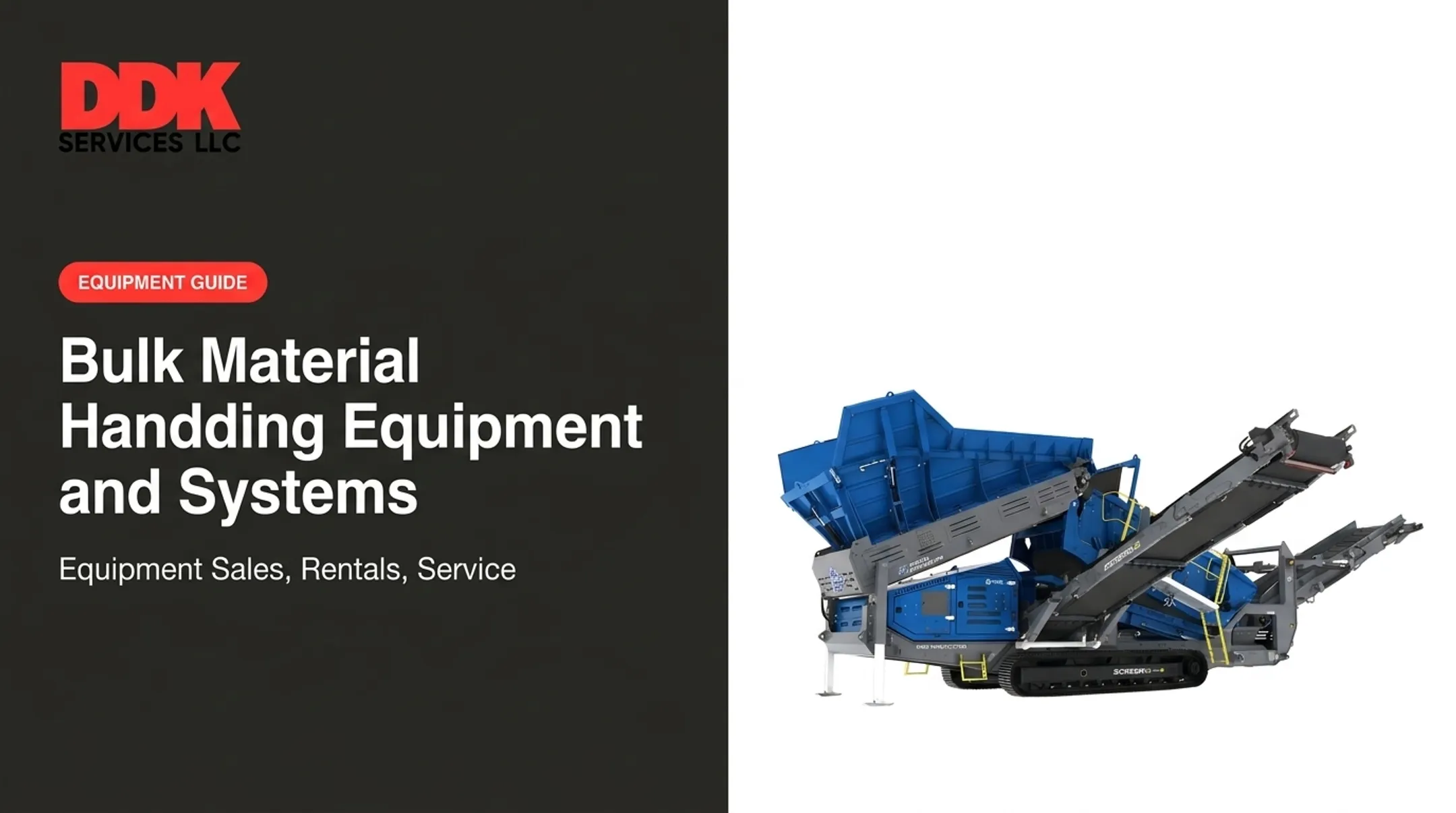
Tracked models like Vermeer's TR6500TX show they can be mobile, with ground-level maintenance access. Compare footprint, access and feed fit against a vibrating screen before committing.
Specialized screens
- Flip-flow screens alternately tension and relax flexible polyurethane mats, which helps with sticky or fibrous feed.
- High-frequency screens vibrate the media directly at 3,600 to 4,200 RPM, a motion specification and not a capacity rating.
- Self-cleaning media use independently vibrating wires to resist buildup.
- Dewatering screens drain water through the media. Drip-free doesn't mean moisture-free.
Confirm feed characteristics and media compatibility first.
Screen media and plant formats
| Media | Trade-off |
|---|---|
| Woven wire | Many openings, wears faster, noisier |
| Punched plate | Suits high-impact, abrasive duty |
| Rubber | Absorbs impact, quieter, less open area |
| Polyurethane | Abrasion resistant, quieter, less open area than wire |
| Modular panels | Replace individual panels, mix apertures |
Plant formats differ too:
- Tracked mobile units follow the work and are fed by loaders or excavators
- Wheeled portable plants move between sites and suit less frequent relocation
- Stationary plants fit long-term production
How Mining Screens Fit Into a Processing Equipment Train
Circuits vary, but a typical flow runs from a surge hopper through a feeding conveyor to a crusher or screen. In a closed circuit:
- Crusher discharge returns to the screen
- Saleable grades go to stockpiling conveyors
- Off-spec fractions return for reprocessing
The same screen role shifts by application:
- Sand and gravel: Pierce Builders in Connecticut reports up to 3,000 tons per day dry versus around 1,500 wet on one plant, so moisture matters.
- Quarrying: vibrating screens make graded aggregate.
- Mineral processing: dewatering screens handle sands, ores and coal.
- Demolition and C&D: screens turn crushed concrete, brick and asphalt into recycled aggregate.
- Topsoil, mulch and compost: trommels grade soil and organics.
Across these setups, mismatches cause trouble. An undersized screen behind a big crusher creates bottlenecks and recirculation. Poor discharge arrangements cause contamination and uneven stockpiles.

Coordinate screen capacity with feeders, crushers, conveyors and any washing equipment.
How to Choose the Right Mining Screen and Equipment
Characterize the feed first
Collect this before comparing machines:
- Material type and maximum feed size
- Target cut sizes
- Abrasiveness, moisture and stickiness
- Particle shape and contamination
- Expected changes in feed conditions
McLanahan notes that width drives carrying capacity while length drives efficiency. For wet, cohesive or inconsistent feed, ask for laboratory testing or a sample evaluation. That confirms fit, but it doesn't guarantee a field production rate.
Define products and targets
Decide how many products you need, the gradations, acceptable carryover, feed rate, and whether the plant runs continuously. Separate nominal capacity from real application performance, and verify every claim in the manufacturer's documentation.
Match screen, decks and media
Feed and cut size guide motion, deck area, deck count, incline, aperture and media. Every choice trades something: open area against wear life, precision against throughput, noise against maintenance frequency.
Check site and installation limits
- Mobile or stationary deployment
- Footprint, transport and setup
- Power or fuel supply
- Dust and noise controls
- Inspection access and discharge height
- Integration with existing equipment
Confirm structural, electrical, guarding and safety requirements before installing or modifying anything. On surface mines, 30 CFR 56.14107 requires guards on moving machine parts, and Part 62 sets an 85 dBA action level and a 90 dBA limit for noise exposure. Check which rules apply to your site.
Buy, rent, new or pre-owned
Utilization drives this decision. Construction Equipment's 2024 rent-or-buy analysis separates fixed ownership costs, operating costs and rental charges. Renting suits single projects and trials. Pierce Builders rented screening plants first, then kept them and bought more.
Also weigh budget, financing, parts availability, maintenance resources and resale.
DDK Services offers new equipment and rentals exclusively from EDGE Innovate. Its repair services and used machinery sales are not restricted to EDGE. Contact the team about used screeners, the suitability of a specific machine, or pricing for EDGE rentals and pre-owned units.
Questions for your supplier
- What did the application review and any test results show?
- What is the expected wear-part life?
- Is replacement media readily available?
- What does the warranty cover?
- How fast is service response?
- Is operator training included?
- What do delivery and commissioning involve?
- Will it work with my existing plant?
Ask for documented specifications, references or application examples, and a clear list of what the quote includes. Don't pick on purchase price alone.
Mining Screen Maintenance and Performance Best Practices
Routine inspection and cleaning
Follow the manufacturer's lockout procedures, then check:
- Media for damage, tension and wear
- Fasteners and hold-downs
- Deck condition and structural welds
- Springs, bearings, drives and guards
- Chutes and material buildup
Haver's guidance adds daily checks of mounting integrity, bearing lubrication and media tension. Weekly and monthly, inspect belts, drives and bolted connections.
Uneven feed, loose media and worn parts cut separation quality and speed up damage. Shiny spots on media can mean loose sections moving in operation.
Troubleshooting common problems
| Symptom | Likely causes |
|---|---|
| Blinding or pegging | Wet or near-size feed, wrong media |
| Carryover | Excess bed depth, worn media, overfeeding |
| Poor stratification | Uneven feed, wrong motion or angle |
| Low throughput | Blocked apertures, feed rate mismatch |
| Unusual vibration or noise | Worn bearings, loose parts, imbalance |
| Rapid media wear | Abrasive feed, impact, poor tensioning |
| Inconsistent sizing | Damaged media, feed variation |
Make controlled adjustments and bring in a professional inspection. Universal settings can be unsafe or wrong for your machine.
Planned maintenance and lifecycle support
- Keep maintenance logs.
- Replace wear parts on schedule.
- Follow manufacturer lubrication and inspection intervals.
- Plan spare parts ahead.
- Train operators.
- Document checks after repairs.
Condition monitoring can catch developing problems. Haver's Pulse system measures speed, stroke and amplitude, and impact testing finds natural frequencies to avoid resonance. A Lafarge Presque Isle case documents this diagnostic approach, though it reports no measured production gain.

For repair planning, discuss your machine and any bearings, conveyor belting, or wear parts required with DDK Services. Repair work is not restricted to EDGE equipment; confirm service suitability for the specific machine.
Frequently Asked Questions
What is screening in mining?
Screening is the mechanical separation of mined or processed material by particle size. Undersize passes through the media openings, while oversize continues along the deck or returns for further processing.
What is the purpose of mining screens?
They classify and size product, remove oversize or unwanted material, and protect downstream equipment. They also prepare material for further processing or sale.
What are the different types of mining screens?
Main types include vibrating, grizzly or scalping, trommel, flip-flow, high-frequency and dewatering screens. Suitability depends on the material and application.
What are examples of mining screening equipment?
Examples include stationary and mobile screeners, inclined and horizontal vibrating screens, trommels and grizzly screens. Complete plants add feeders and conveyors.
How do I choose the right mining screen for my material?
Evaluate material size, moisture, abrasiveness, stickiness, cut sizes, feed rate and site limits. Then consider media, maintenance needs, and whether renting or buying fits better.
What maintenance does mining screening equipment need?
Plan routine inspections, cleaning, and media and fastener checks. Lubricate where specified, replace wear parts, and follow safe shutdown and manufacturer servicing procedures.